Neurofeedback for children in Berlin | Treating ADHD, Autism & Sensory Processing Disorders
Finally some peace of mind – how neurofeedback helps children with ADHD, autism, and sensory processing disorders achieve greater balance
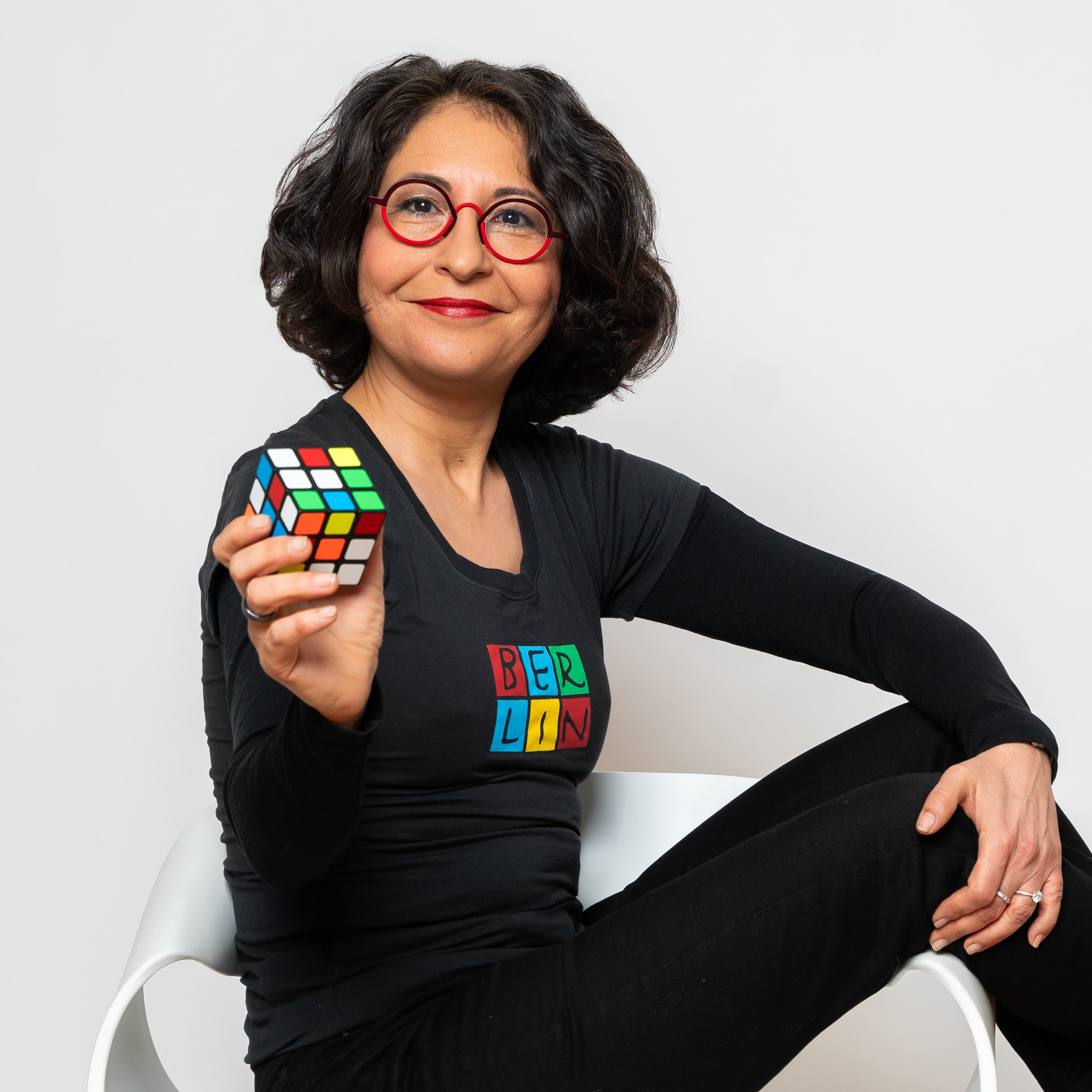
Eveline Hedtke
Neurofeedback specialist

When your child can't find peace – and what really helps
You might know the feeling: Your child can't concentrate, is constantly in motion, has tantrums, or is increasingly withdrawing. School becomes agony, homework a battle, and family life is under constant tension. Diagnoses like ADHD, autism spectrum disorder, or sensory processing disorders often seem like a verdict – and the search for a truly helpful therapy begins.
But there is a path that doesn't stop at symptom suppression, but addresses the root cause: Neurofeedback.
What is neurofeedback – and how does it help your child?
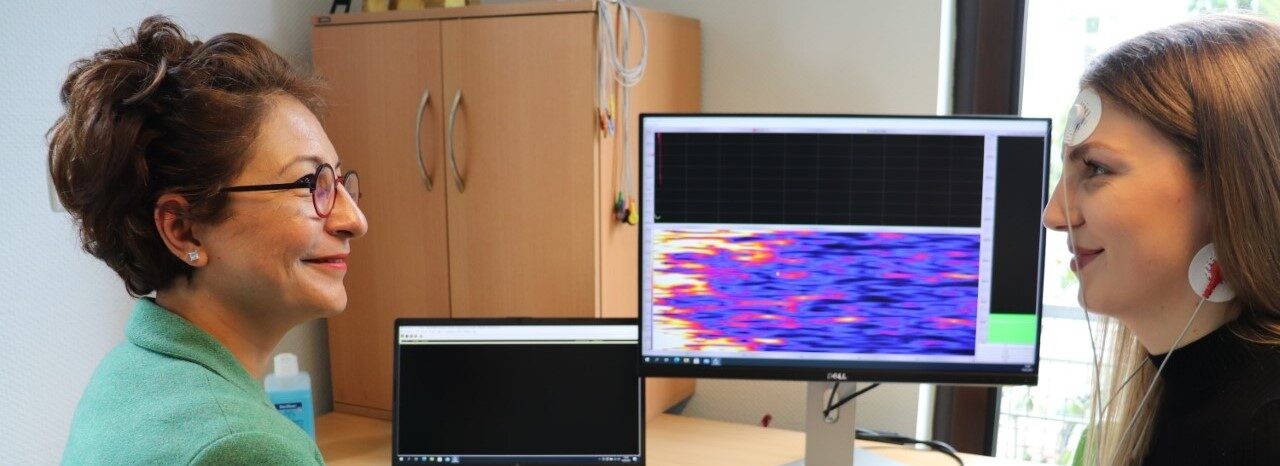
Neurofeedback is a scientifically proven, drug-free training method in which your child's brain activity is measured in real time and made visible on a screen. Using special EEG sensors, we record which brainwaves are active at any given moment – and feed this information back to your child in a playful way.
The unique advantage: This teaches your child to consciously regulate their own brain activity. They recognize the moments when they become restless and train themselves to return to a calmer, focused state. The brain is, so to speak, "rewired" – entirely without medication.
Neurofeedback for ADHD – training concentration and impulse control
ADHD is not a character flaw, but a neurobiological characteristic. The affected brain areas – particularly the regions responsible for planning, impulse control, and working memory – are underactive or poorly coordinated.
Neurofeedback addresses exactly this. Children who train over a longer period report better concentration at school, less inner restlessness, improved impulse control, and more stable emotional states. The training takes place playfully – often in the form of a computer game where the game character moves forward only when the brain is operating in the desired frequency range.
Neurofeedback for Autism – promoting emotional regulation and social interaction
Children with autism spectrum disorder often have difficulties with emotional regulation and social interaction. Neurofeedback – especially slow cortical potential training – can improve cognitive efficiency and emotional processing in autistic children.
In practice, this means better emotional regulation, less sensory overload, improved ability to recognize social cues, and more confidence in daily life. Neurofeedback is not a replacement for other therapies, but a valuable building block – especially when traditional approaches reach their limits.
Neurofeedback for sensory processing disorders – strengthening the connection between brain and body
Sensory processing disorders often show up as motor insecurities, coordination problems, or difficulties in processing sensory impressions correctly. Here, we targetedly combine neurofeedback with movement-based exercises – inspired by the Melillo Method.
Before we begin the actual neurofeedback, we activate your child's brain through balance exercises, gross and fine motor tasks, as well as sensory stimuli. This preparation improves neuroplasticity and makes the actual training more effective. Your child doesn't just learn on screen – but with their entire body.
The "Generation C" – Why more children than ever benefit from neurofeedback today
Today's generation of children is often referred to as "Generation C" – and not just because of Covid. The "C" stands for C-shaped spine due to lack of movement, Collapsed Core – lack of physical core stability, and Cognitive Overload – constant sensory overload from digital media.
The pandemic has changed family dynamics, teachers are lacking, and parents are overwhelmed. Many children are sensory overloaded or internally disconnected. They spend too much time in front of screens, too little time moving.
Neurofeedback offers a real alternative here: It gives them tools to learn to regulate their own nervous system – independent of external circumstances.
How neurofeedback works for your child – without pressure, with fun
Step 1: Test session (up to 60 minutes, €150 plus VAT)
We apply pain-free EEG sensors to your child's head. Within a few minutes, we can see which brainwave patterns dominate and where training approaches make sense. Your child already gets initial impressions of how their nervous system reacts to certain stimuli – many children describe this first session as relaxing and exciting at the same time.
Step 2: Individual training plan
If the test session shows that neurofeedback is sensible, we will together develop a tailored training plan. For ADHD, we selectively train the attention networks; for autism, emotional regulation; for sensory processing disorders, sensory integration.
Step 3: Regular sessions (75–90 minutes, €178.50 incl. VAT)
Each unit begins with ergonomic and cognitive preparation – movement, balance, sensory activation. Then follows the actual neurofeedback. If needed, we supplement with biofeedback for body regulation.
First noticeable changes typically appear after 3 to 5 sessions. Long-lasting, stable effects – better concentration, calmer sleep, fewer outbursts – usually develop after 12 to 24 units.
Who is neurofeedback suitable for?
Neurofeedback is suitable for children with ADHD or ADD – in cases of inattention, hyperactivity, and impulsivity. It helps with autism spectrum disorder – with difficulties in social interaction and emotional regulation. It supports sensory processing disorders – with problems in sensory processing and coordination. It is effective for emotional dysregulation – in cases of tantrums, anxieties, and mood swings. It helps with sleep disorders – with falling asleep and staying asleep. And it is suitable for learning difficulties – such as dyslexia, dyscalculia, and concentration issues.
And of course, for all children who simply feel that "something is not right" – without a clear diagnosis being present.
What parents say – experiences with neurofeedback
"My son has made significant progress after 25 sessions – not only in school, but also in family life. He is much more balanced and can concentrate better."
"Neurofeedback promotes self-regulation and makes traditional approaches more effective. The effects are immediately noticeable – many clients report better sleep, more serenity, and less stress in everyday life."
"The therapy was always in a friendly and nice atmosphere. My child was motivated and loved to participate."
Neurofeedback in Berlin-Grunewald – your training center
If you would like to learn more or schedule an appointment, feel free to call me or write to me.
Phone: +49 151 12440870
Address: Lynarstr 13 A, 14193 Berlin – Grunewald
Note: Neurofeedback is a drug-free training method and does not replace medical treatment. If you have questions about its applicability for your child, we would be happy to advise you in a personal conversation.